
Best Snowmobile Helmet for Glasses Wearers
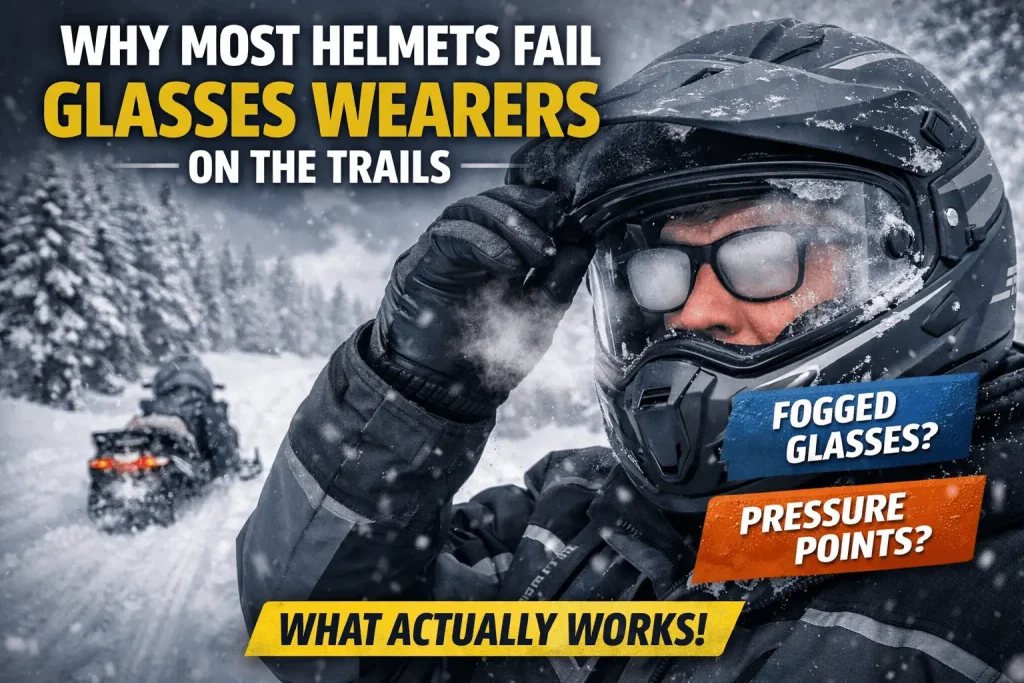
The first time I came back from a full day on the trails with a splitting headache and glasses so fogged I could barely see past the hood of my sled, I knew something had to change.
I wear prescription glasses. I’ve been riding snowmobiles for years. And for a long time, those two things did not get along.
I went through the same cycle most glasses-wearing riders go through — bought a helmet that felt fine in the shop, got out on the trail, and within the first hour had fogged lenses, pressure on both temples, and a chin piece that made putting my glasses on feel like a puzzle I hadn’t agreed to solve. Came home, read reviews, bought a different one. Same problems, different helmet.
What I eventually figured out — after enough cold, frustrating rides — is that most helmets aren’t designed with glasses wearers in mind at all. The fog issue and the fit issue are treated as afterthoughts, if they’re addressed at all.
This article is everything I wish I’d known before buying my first three helmets. It covers the actual reasons glasses fog inside a helmet, what interior features genuinely make a difference, and which helmets have worked best for riders who wear prescription frames in real cold-weather conditions. No guesswork, no generic gear lists — just what actually works.
Why Most Helmets Fail Glasses Wearers Before You Even Hit the Trail
Walk into any powersports shop and ask about glasses-friendly helmets, and you’ll likely get a vague answer about “extra interior space.” That’s not good enough — and here’s why.
The Temple Pressure Problem Nobody Talks About
When you put on a helmet over glasses, the arms of your frames press against the sides of your head. In a normal situation — walking around, say — that’s annoying. After two hours on a snowmobile, it becomes genuinely painful.
The interior padding on most helmets isn’t designed with glasses in mind. Cheek pads squeeze inward, and the arms of your frames have nowhere to go. Over time, the constant pressure can cause a dull ache at your temples that turns a good trail day into a miserable one.
The fix is a helmet with either recessed channels cut into the interior padding where glasses arms can sit without getting pinched, or adjustable cheek pads that let you dial in the fit. Some helmets — like the CKX Mission — specifically advertise adjustable cheek pads with glasses clearance built in. Others, like the Ski-Doo Modular 3, have an interior shape that naturally accommodates most frame sizes without the squeeze.
One real-world tip from experienced riders: if your glasses arms are wide or thick, going up one helmet size often solves 80% of your fit problems right away.
Why Your Visor Fogs Even When the Helmet Says “Anti-Fog”
Most anti-fog visors use a dual-lens design — two panes of polycarbonate with a small air gap between them, similar to a double-pane window. This insulates the inner surface from the cold outer surface, which is what causes standard single-lens visors to fog in the first place.
The dual-lens design works well for the visor itself. But it does nothing for your glasses.
Your breath rises from below, hits the inner surface of your glasses lenses, and condenses there — especially when you’re moving slowly, stopped at a trailhead, or breathing harder from exertion. This is a separate problem entirely, and it requires a separate solution: a well-designed breath box that redirects exhaled air downward and out of the helmet rather than letting it rise up into your face.
The Difference Between Glasses Fogging and Visor Fogging
This is the distinction that no competitor article explains clearly, but it’s the most important thing to understand.
Visor fogging happens when warm, humid air inside the helmet contacts the cold inner surface of the face shield. A heated electric visor or dual-lens shield solves this.
Glasses fogging happens when your breath reaches your lenses. This has nothing to do with the visor. It’s caused by poor breath box design, bad helmet fit, or incorrect sizing that creates gaps where air circulates freely inside the helmet.
You can have a perfect anti-fog visor and still have glasses that fog constantly — because these are two different problems with two different solutions.
What to Look for Before You Buy — A Glasses-Specific Checklist
Interior Width and Glasses Channel Cutouts
Before anything else, look for helmets that either explicitly mention glasses-friendly interior design, or that have adjustable cheek pads. The interior width at the temple area is the single most important fit measurement for glasses wearers.
Slim, rectangular frames generally cause fewer problems than wide, thick frames. If your frames are on the wider side, look for helmets with softer, more compressible interior padding — this makes a bigger difference than the raw interior dimensions.
Helmet Type Comparison for Glasses Wearers
Full-face helmets with a breath box (like the 509 Altitude) work well for mountain and off-trail riders who want a lightweight setup with goggles. The open face of a snocross-style helmet means your glasses go on and come off without any struggle, but managing fogging requires a well-sealed breath box and a quality balaclava.
Modular (flip-up) helmets (like the Ski-Doo BV2S and Modular 3) are by far the most popular choice among glasses-wearing trail riders. The flip-up chin bar means you can put your glasses on after the helmet is already on your head — no more trying to thread frames through a tight opening. At trail stops, you can flip up the chin piece without removing the whole helmet.
Open-face helmets with OTG goggles work for some riders, but fit is critical. Standard goggles may not accommodate glasses frames, and getting a seal around both your glasses and the goggle foam is harder than it sounds. This setup is explored more in the fogging solutions section below.
Breath Box Design and How It Redirects Airflow
A good breath box seals around your nose and mouth and routes exhaled air out through the bottom or sides of the helmet — away from your glasses. A poor breath box either leaks around the edges or leaves gaps that let warm, moist air circulate freely inside the helmet and straight up to your lenses.
When evaluating a breath box, look for a soft rubber or neoprene seal that conforms to your face shape. Rigid plastic breath boxes tend to leave gaps at the bridge of the nose or along the cheeks, which is exactly where you don’t want air escaping.
One real rider’s tip that came up repeatedly on forums: try removing the breath box entirely on milder days. Several Mission helmet users found that running without the mask actually cleared their glasses faster at low speeds because air circulated more freely.
Electric Heated Shield — When It’s Worth It and When It’s Not
An electric heated shield solves the visor fogging problem completely. In temperatures below 0°F, or during riding in freezing precipitation, it’s worth every dollar. The shield stays warm, external moisture doesn’t stick, and you can keep it closed all day without cracking it open to clear condensation.
The tradeoff: you’re tethered to a cord connected to your sled. Some riders find this a non-issue. Others hate it, especially on technical off-trail riding where you’re constantly moving around on the machine.
If you mostly do trail riding in genuinely cold conditions — say, consistent temps below 10°F — get the electric shield. If you do mixed riding in variable temperatures, the non-electric dual-lens visor on a well-designed helmet often handles it well enough.
Safety Certifications That Actually Matter
DOT (FMVSS 218) is the minimum legal standard for snowmobile helmets in the United States. All helmets on this list meet DOT.
ECE 22.06 is a more rigorous European standard that has become the benchmark for higher-quality helmets globally. It tests for a wider range of impact scenarios than DOT and is widely considered more reliable.
SNELL is an independent certification that tests for even higher impact resistance. Few snowmobile-specific helmets carry SNELL certification — it’s more common in motorsports and motorcycle helmets.
For trail and recreation riding, DOT plus ECE 22.06 is a solid combination. If you’re doing aggressive off-trail or mountain riding, prioritize ECE-certified helmets.
Weight and Long-Ride Comfort for Older Riders
The average snowmobiler is in their mid-50s, and neck fatigue is a real concern on longer rides. A heavy helmet makes this worse. The difference between a 3.5 lb. helmet and a 2.9 lb. helmet doesn’t sound like much, but after four or five hours on the trails, it adds up.
Carbon fiber shell helmets (like the 509 Carbon Altitude) are noticeably lighter than polycarbonate shells. If you’re doing mileage days, the weight premium is worth considering.
Best Snowmobile Helmets for Glasses Wearers — Our Top Picks
These picks are based on real rider feedback from snowmobile forums, verified specs, and performance data across a range of riding conditions and temperatures.
1. Ski-Doo BV2S — Best Overall for Glasses Wearers
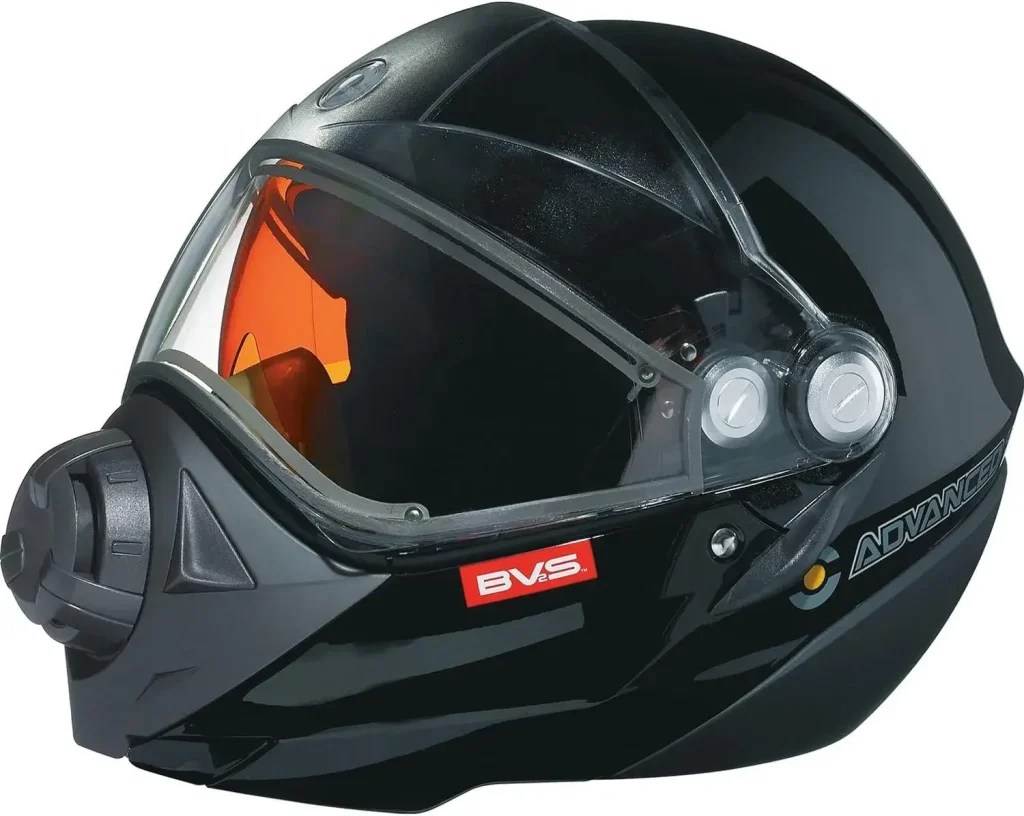
Who it’s for: Trail riders who want a full-face helmet with outstanding fog control and don’t want to deal with goggles.
The BV2S has earned its reputation as one of the best snowmobile helmets for glasses wearers through genuine engineering, not marketing. Its Clear Vision Technology uses a dual-lens visor with 180° peripheral vision — one of the widest fields of view in any full-face snowmobile helmet.
The real star for glasses wearers is the BV2S fog-resistant mask system: a soft surgical rubber seal with an easy-adjust knob that lets you dial in the fit to your face shape. When the seal is set correctly, exhaled air routes away from your glasses entirely. On cold-weather trail rides, many glasses-wearing riders report going full days without fogging.
It also features a lever-activated integrated sunshield — useful when you’re wearing prescription distance glasses that aren’t tinted. No need to carry a separate pair of sunglasses or photochromic lenses.
What real riders say: On DooTalk and Hardcore Sledder, the BV2S consistently comes up as a top recommendation for glasses wearers, with multiple riders reporting years of use without significant fogging issues. One long-time rider noted: after switching from an HJC modular, his fogging problems essentially disappeared.
Watch out for: The mask adjustment takes some trial and error to get right. Riders with very flat nose bridges sometimes struggle to get a perfect seal. If you run hot or sweat heavily, you may still need to crack the visor at rest stops.
Price range: $350–$500 depending on configuration (electric or non-electric shield).
2. CKX Mission AMS — Best Modular Pick for Glasses Wearers
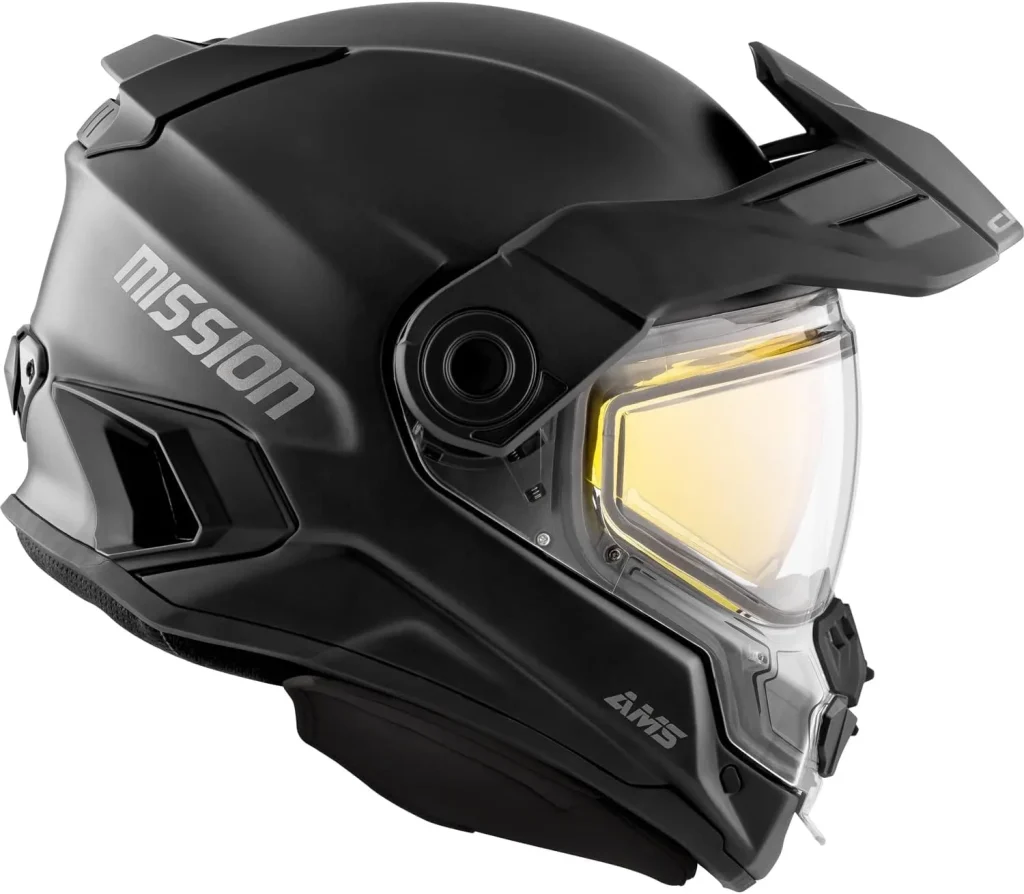
Who it’s for: Trail riders who’ve tried other modular helmets and been disappointed by fogging — and want something engineered from the ground up to solve the problem.
The CKX Mission uses what CKX calls an Air Management System (AMS) — a passive ventilation design that uses aerodynamic pressure differences to pull humid air out through exhaust vents at the rear of the helmet. Unlike a breath box that redirects air, the AMS actively draws it out.
In practice, this makes a significant difference for glasses wearers. The system works best when the sled is moving — air entering the front of the helmet and exiting at the rear creates the pressure differential that drives moisture out. At stops, some fogging can develop, but cracking the visor briefly clears it.
The Mission has dedicated adjustable cheek pads with room for glasses frames, and several experienced glasses-wearing riders have called it the best helmet they’ve ever used for this specific purpose — including one SledMagazine reviewer with prescription glasses who tested multiple helmets over several seasons.
What real riders say: Multiple DooTalk users with thousands of miles on the Mission specifically in glasses-wearing situations give it consistently high marks. One rider logged 6,300 miles across two seasons in temperatures ranging from -30°F to freezing rain and still rated it his best glasses-friendly helmet.
Watch out for: The Mission runs small — go up one size if you’re between sizes, and definitely size up if you wear glasses with wider frames. Some riders report the face shield can be stiff to snap shut. The price is on the higher end.
Price range: $550–$700 with heated shield.
3. Ski-Doo Modular 3 — Best Flip-Up Helmet for Glasses Wearers
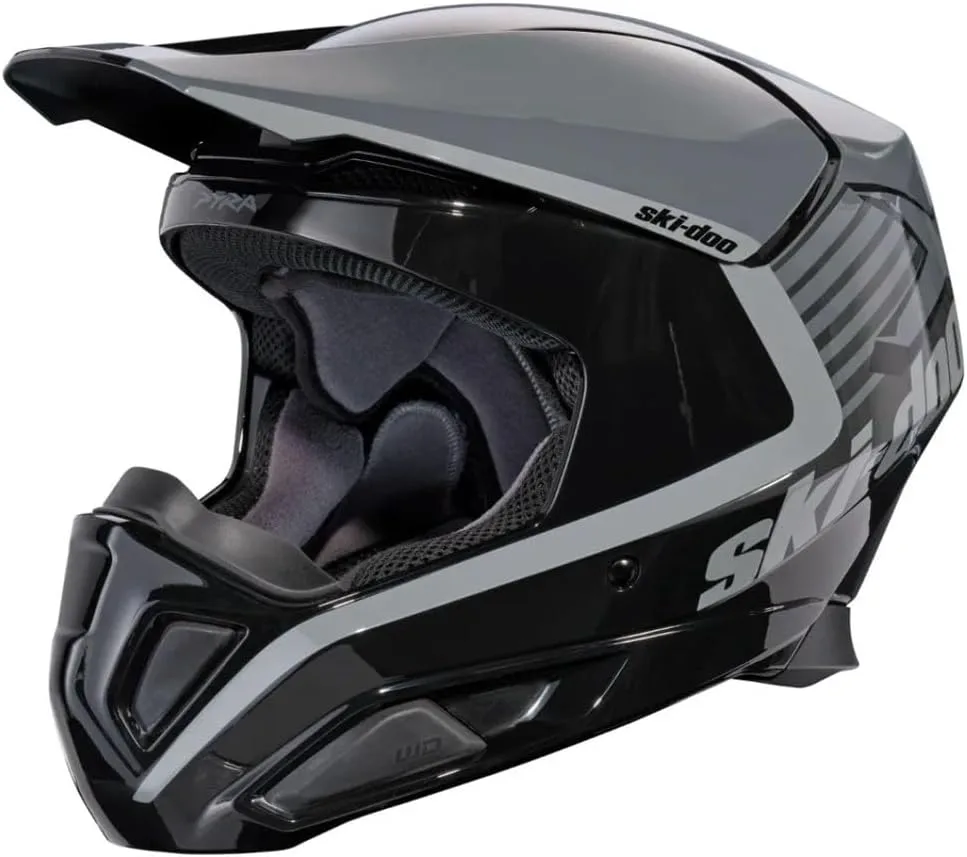
Who it’s for: Riders who prioritize ease of use and want the convenience of a true modular design without paying premium prices.
The Modular 3 has been a go-to recommendation for glasses wearers on snowmobile forums for years. The flip-up chin bar solves the single most frustrating physical problem: getting glasses in and out of the helmet. You can put the helmet on, then put your glasses on afterward without any contortion. At trail stops, flip the chin up, leave your glasses in place, and carry on.
Forum feedback consistently shows that glasses fogging is manageable with the Modular 3 — not perfect, but far better than most full-face alternatives without heated shields. The dual-lens visor keeps the face shield clear, and cracking the visor slightly at rest stops handles the glasses fogging that occasionally develops.
What real riders say: On TY4Stroke and DooTalk, the Modular 3 gets strong recommendations specifically from glasses wearers. One rider who’d tried multiple helmets over many seasons called it the best he’d found for glasses fit and overall usability.
Watch out for: At very cold temperatures (below -20°F), glasses fogging at stops requires active management — cracking the visor, letting things clear, then closing it back up. This is a minor inconvenience for most riders but can be frustrating in extreme cold.
Price range: $400–$550.
4. 509 Altitude 2.0 — Best for Mountain and Off-Trail Riders
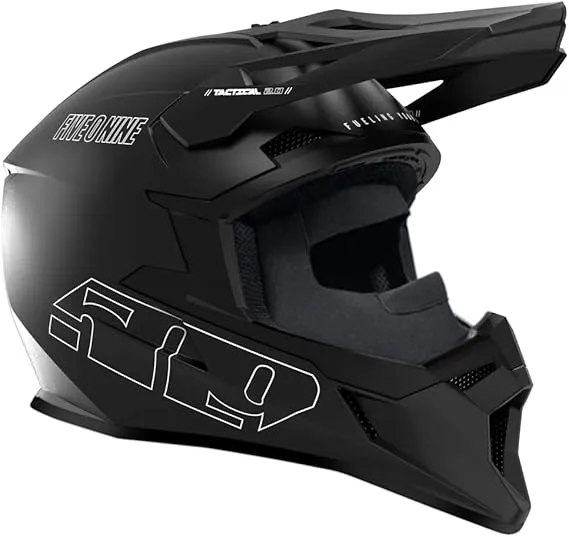
Who it’s for: Riders who do mountain, off-trail, or aggressive powder riding and prefer the freedom of a snocross-style helmet with goggles.
The 509 Altitude is built for riders who are willing to manage their glasses-and-goggle combination in exchange for the lighter weight, better ventilation, and visibility that an open-face/snocross design offers.
The Altitude 2.0 is significantly lighter than its predecessor, and the Fidlock magnetic chin strap buckle is genuinely excellent — you can operate it with gloves on, which matters more than you’d think when you’re digging a sled out of deep snow with cold hands.
The breath box, when properly fitted, works well to reduce goggle fogging. However, for glasses wearers, the challenge shifts from helmet design to goggle selection. Standard goggles don’t fit over most frames well. The most commonly recommended pairing from real riders is the 509 Altitude with 509 Aviator goggles and a Klim Arctic balaclava — this combination, when properly fitted, provides good fog control across a wide temperature range.
What real riders say: Feedback is more mixed for this helmet specifically for glasses wearers compared to the modular options. Riders who took the time to dial in the breath box and balaclava combination report excellent results. Those who didn’t found it foggy and frustrating. The setup requires more experimentation.
Watch out for: This is not a plug-and-play solution for glasses wearers. Plan on a few rides to get the combination dialed in. Also: the 509 Altitude fits oval heads well but can feel off for rounder head shapes — try before buying if possible.
Price range: $250–$450 depending on shell material (fiberglass vs. carbon fiber).
5. Ski-Doo Oxygen — Best for Riders Who Want Maximum Visibility

Who it’s for: Riders who prioritize an exceptionally wide field of view and don’t mind a premium price for a Ski-Doo branded experience.
The Ski-Doo Oxygen is a full-face helmet with a very large visor opening, designed specifically for snowmobiling. The broad shield provides exceptional peripheral visibility — useful on busy trails where you’re checking for other traffic coming from the sides.
For glasses wearers, the Oxygen gets mixed reviews. Some riders love it — particularly those with average-sized frames who found the interior shape accommodating. Others, especially those with wider frames or strong prescriptions requiring larger lenses, found the fogging management more work than expected.
The Oxygen works best when conditions are consistent — steady temps, continuous movement. In variable conditions with lots of stops, or in extreme cold below -20°F, riders report that glasses fogging requires more active management.
What real riders say: On DooTalk, one rider had great success with the Oxygen for glasses, while another in the same thread on the same model reported consistent fogging. Head shape and face geometry seem to play a bigger role with this helmet than others.
Watch out for: Sizing can run limited at larger head sizes. The Oxygen is a love-or-hate helmet for glasses wearers — try it on in person with your actual glasses before committing.
Price range: $500–$700.
6. HJC IS-MAX II Snow — Best for Riders with Large Frames
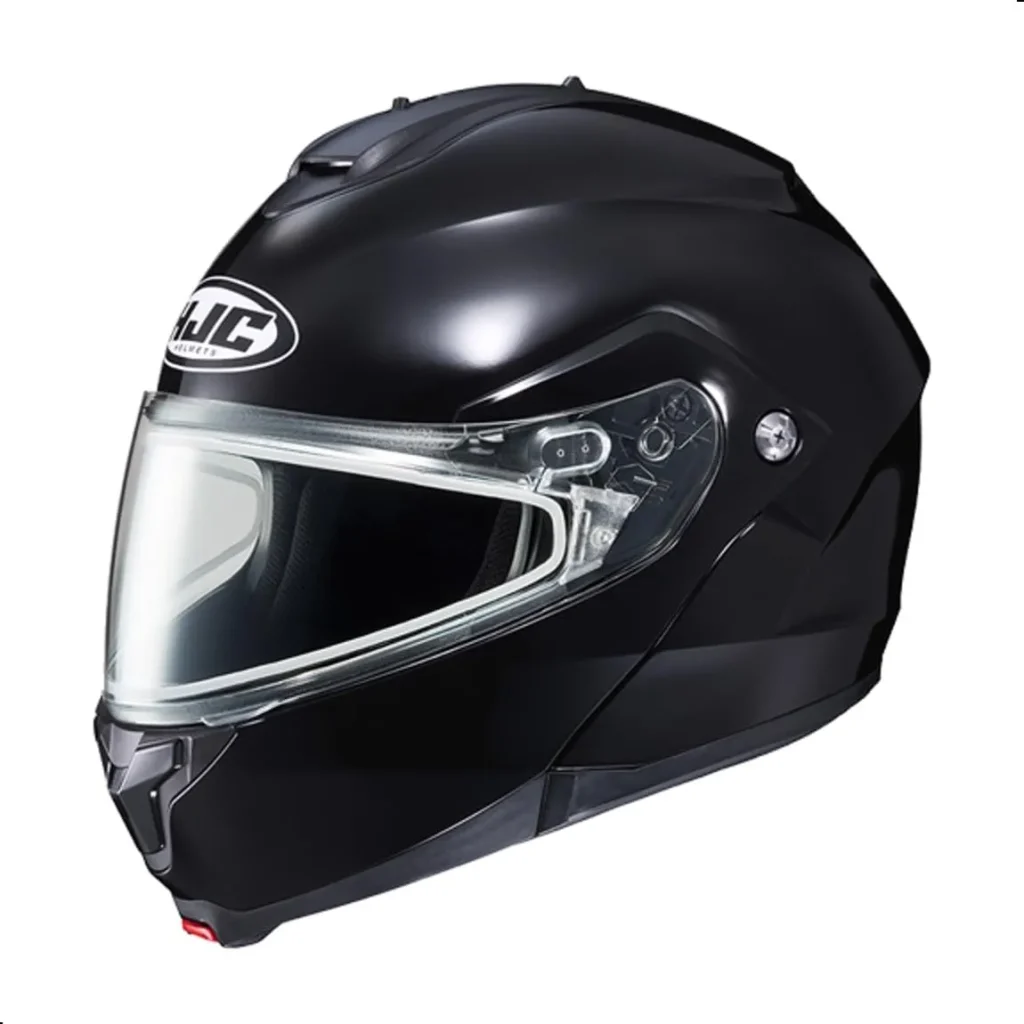
Who it’s for: Riders on a more limited budget who wear larger prescription frames and need more interior clearance than most helmets offer.
The HJC IS-MAX II Snow is a modular helmet with a flip-up chin bar and a dual-lens visor. It’s not as specialized for glasses wearers as the helmets above, but its interior shape offers more room than many competitors at its price point.
For riders with large frames — think wider, thicker plastic or metal frames — the IS-MAX II’s interior tends to be more forgiving than tighter-fitting options. It’s not a perfect glasses solution, but for trail riding in moderate conditions, it’s serviceable and significantly more affordable.
Watch out for: At low temperatures, fog management requires more attention than the premium options above. This is a reasonable budget choice but not the long-term ideal for serious glasses wearers.
Price range: $150–$220.
Side-by-Side Comparison
| Helmet | Type | Glasses Fit | Fog Control | Heated Shield | Price Range | Best For |
|---|---|---|---|---|---|---|
| Ski-Doo BV2S | Full-face | Excellent | Excellent | Available | $350–$500 | Trail riders, all conditions |
| CKX Mission AMS | Modular | Excellent | Outstanding | Available | $550–$700 | Trail riders, severe cold |
| Ski-Doo Modular 3 | Modular | Very Good | Good | Standard | $400–$550 | Convenience-focused riders |
| 509 Altitude 2.0 | Snocross | Good (with OTG) | Good (with setup) | No | $250–$450 | Mountain/off-trail riders |
| Ski-Doo Oxygen | Full-face | Variable | Variable | Available | $500–$700 | Wide-FOV trail riders |
| HJC IS-MAX II Snow | Modular | Good for large frames | Moderate | Available | $150–$220 | Budget buyers, large frames |
How to Get the Right Fit When You Wear Glasses
How to Measure Your Head Correctly Before Ordering Online
Use a flexible tape measure and wrap it around the widest part of your head — typically about an inch above your eyebrows and around the back above your ears. This is your head circumference, and it maps directly to helmet sizing charts.
Don’t trust hat sizes or cap sizes for helmet sizing. They’re not the same measurement system.
Why Sizing Up Often Solves Most Glasses Problems
Multiple riders on snowmobile forums share the same experience: they bought the helmet that fit perfectly without glasses, then discovered it was too tight once their frames went in. Interior padding compresses a small amount over time, but glasses arms need clearance right from day one.
If you’re between sizes or if your frames are on the wider or thicker side, try the larger size first. A slightly larger helmet with the right interior padding still fits well — a helmet that pinches your frames makes every ride uncomfortable.
The 3-Step Fit Test Before Your First Ride
- Put the helmet on fully, then put your glasses on (for modular helmets) or put glasses on first then the helmet (for full-face styles where you can manage it).
- With glasses in place, shake your head side to side and up and down. Your glasses should not shift or rattle inside the helmet.
- Wear the full setup for at least 15 minutes indoors. If you feel any pressure at your temples during that time, the fit isn’t right.
Frame Shapes and Sizes That Work Best Inside a Snowmobile Helmet
Narrower frames with thinner arms are easier to fit inside any helmet. If you’re getting new prescription glasses and you know you’ll be snowmobiling, choose frames that are no wider than your face at the temple area, and look for thin wire or plastic arms rather than thick wraparound styles.
Smaller lenses also reduce fogging surface area — a real-world observation from multiple forum riders who switched to smaller-lensed frames and immediately noticed less fogging.
Fogging Solutions That Actually Work in Real Riding Conditions
Anti-Fog Sprays and Coatings — What Holds Up in Extreme Cold
Several riders recommend “Cat Crap” anti-fog paste (yes, the real product name) as a glasses lens treatment. Applied lightly and buffed off, it creates a hydrophobic surface that helps prevent condensation from forming.
Crizal Optifog coating, applied by an optician directly to your prescription lenses, is a more permanent solution. Multiple forum riders report using it for full seasons with noticeably reduced fogging. It requires activation with a special cleaning liquid, and the effect lasts for days of riding before reapplication.
Baby shampoo diluted with water, wiped onto lenses and rinsed off, has been mentioned by riders as a simple, cheap anti-fog method that actually works reasonably well.
None of these solutions eliminate fogging completely in all conditions — but combined with a well-fitted helmet, they significantly reduce how often it becomes an issue.
Pinlock Inserts for the Visor — What They Actually Do
A Pinlock insert is a secondary lens that pins into the inside of your visor using small silicone pins. The sealed air gap between the Pinlock lens and the visor acts as an insulator, keeping the inner visor surface warmer and preventing condensation.
Pinlock solves visor fogging. It does not solve glasses fogging. If you’ve been told to buy a Pinlock for your glasses problem, that’s incomplete advice.
That said, if your visor is fogging and your glasses are fogging, a Pinlock takes care of the first problem, which lets you focus on addressing the second one separately.
OTG Goggles with Open-Face Helmets — A Real Alternative Worth Considering
OTG (over-the-glasses) goggles are specifically designed to fit over standard prescription frames. When paired with an open-face or snocross-style helmet, they can work well — but the fit has to be right.
Look for OTG goggles that have wider foam channels at the sides to accommodate your frame arms without creating pressure points. The 509 Aviator and several Smith OTG models are mentioned by riders as fitting glasses reasonably well. The key is getting a seal around both the goggles and your glasses simultaneously.
If you ride off-trail or mountain and the goggle-style setup appeals to you, this is worth trying. For trail riding where you make frequent stops and want to take glasses on and off easily, a modular helmet is generally more convenient.
Ventilation Habits That Reduce Fogging on the Trail
A few habits that experienced glasses-wearing riders swear by:
Before you close the visor and take off, let it stay cracked for the first minute of riding. This lets the temperature inside the helmet stabilize closer to outside air temperature, which greatly reduces the chance of initial fogging.
At trail stops, flip the visor open before coming to a complete stop — not after. Opening it while you still have some airflow moving through the helmet prevents the moisture from your breath from sitting still and condensing.
When stopped for food or a break, take the helmet off or at least flip the chin piece up. A helmet sitting on your head without airflow at a rest stop is when the worst glasses fogging happens.
Riding Scenarios — Which Helmet Type Fits Your Style
Long Trail Riding in Cold Weather (Below 20°F)
This is where a modular helmet with an electric visor — the BV2S or CKX Mission with heated shield — performs best. The electric visor keeps external frost from building, the breath box handles glasses fogging on the move, and the modular design makes rest stops easy without removing the helmet.
Mountain and Deep Snow Riding
Off-trail riders who work hard physically, sweat more, and need maximum head mobility tend to prefer snocross-style helmets with goggles. The 509 Altitude 2.0 with properly fitted OTG goggles and a quality balaclava is the most common setup in this crowd. Accept that there’s more trial and error with glasses in this configuration.
Casual Weekend Riding and Short Runs in Moderate Temps
If your riding is mostly weekend trail runs in temperatures above 15°F, nearly any modular helmet on this list handles glasses reasonably well. The Modular 3 at this price point is hard to beat for straightforward trail riding.
Variable Temperatures — Days That Start Cold and Warm Up
This is one of the harder scenarios. A helmet optimized for -20°F may run too warm once the afternoon sun hits and temps climb toward freezing. Look for helmets with adjustable ventilation — the BV2S and Mission both have this. Being able to open additional vents on a warming afternoon reduces sweating and the associated fogging it causes.
Mistakes Glasses-Wearing Riders Make When Buying a Helmet
Buying purely on brand reputation without checking interior dimensions. A well-known brand doesn’t mean the interior shape works for your head and your frames. Always try to test with your actual glasses on before buying.
Ignoring the breath box entirely. Many riders buy a helmet and never spend the ten minutes needed to properly adjust the breath box fit. The breath box is the primary tool for controlling glasses fogging, and a poorly fitted one is barely better than no breath box at all.
Skipping the electric shield to save money in genuinely cold climates. If you regularly ride in temperatures below 10°F, the electric shield is not a luxury. Cracking the visor constantly to manage frost and fogging breaks the experience of being out there. The extra cost pays back on the first cold ride.
Ordering online without knowing your actual head measurement. Helmet sizing varies significantly between brands. The only reliable way to know your size is to measure your head circumference and compare it against the specific brand’s size chart — not against your size in another brand.
Assuming contacts will always be an option. Several riders in forum discussions mentioned getting LASIK or trying contacts specifically for snowmobiling, then returning to glasses years later due to dry eyes, age-related vision changes, or surgery that couldn’t be undone perfectly. If contacts are your current plan B, it’s worth having a glasses-compatible helmet anyway.
Frequently Asked Questions
Can I wear prescription glasses inside a full-face snowmobile helmet?
Yes, but the helmet needs to have sufficient interior clearance at the temple area. Full-face helmets generally require you to put your glasses on after the helmet is in place, which can be awkward — though manageable with practice. Modular helmets eliminate this problem by letting you flip the chin piece up, place your glasses, then close the helmet back down.
What is the best helmet type for glasses wearers — modular or full-face?
For trail riding, modular helmets are generally the better choice for glasses wearers because of how much easier they make putting glasses on and managing them during rest stops. For off-trail and mountain riding where weight and visibility are priorities, a snocross-style full-face with OTG goggles is more common.
How do I stop my glasses from fogging inside my helmet?
This requires addressing three things together: a breath box that’s properly fitted to your face to redirect exhaled air, a well-sealed helmet that doesn’t have gaps where air can circulate to your lenses, and an anti-fog treatment on your glasses lenses. No single fix solves it entirely — but the combination manages it well for most riders in most conditions.
Should I buy a size up if I wear glasses?
Often, yes — especially if you have wider or thicker frames, or if you find you’re at the upper end of a size range based on head circumference. The interior padding in most helmets doesn’t leave much room for glasses arms, and going up a size provides meaningful additional clearance. Plan on testing with your actual glasses before finalizing the decision.
Are there snowmobile helmets specifically designed for glasses wearers?
The CKX Mission and Ski-Doo Oxygen are the two helmets most explicitly designed and marketed with glasses wearers in mind. The Mission’s AMS system and adjustable cheek pads, and the Oxygen’s interior sculpting, both address glasses accommodation as a primary design goal rather than an afterthought.
Can I use OTG goggles instead of a visor helmet?
Yes, and for some riders this is the better solution — particularly off-trail riders who prefer snocross-style helmets. OTG goggles have wider interior channels to fit over frames without applying pressure to your temples, and a proper seal is achievable with the right combination of helmet and balaclava. The tradeoff is more initial setup effort to get the combination dialed in.
How long does an anti-fog coating last on a snowmobile visor?
Most dual-lens visors hold their anti-fog properties for one to two seasons with proper care. The biggest killer of visor anti-fog performance is wiping the inner lens with a dry cloth — the micro-abrasions degrade the coating over time. Always use a soft, damp microfiber cloth on the inner surface, and never touch it with bare fingers. Electric heated shields sidestep this issue almost entirely.
Final Word — What Matters Most When You Wear Glasses on a Snowmobile
Two things make or break the experience: how well the helmet handles your breath, and how well the interior shape accommodates your frames.
Everything else — brand name, color, whether it has a sunshield — is secondary to those two points.
The riders who’ve had the best long-term experiences tend to share a few things in common: they took the time to measure their heads, they tried helmets on with their actual glasses before buying, and they spent a few early rides adjusting their breath box and overall setup rather than expecting perfection on day one.
For most trail riders who wear glasses, the CKX Mission AMS or Ski-Doo BV2S will serve you better than any other option on the market right now. For modular convenience at a slightly lower price point, the Modular 3 remains one of the most rider-recommended glasses-friendly options available.
Whatever you choose, go one size up if you’re between sizes. Dial in your breath box before you head out. And give yourself two or three rides to get the full setup working the way it should.
The right helmet, properly fitted, makes glasses on a snowmobile a complete non-issue. That’s the goal — and it’s achievable.