
Is a Heated Snowmobile Helmet Worth it?
Winter riding gear is key for snowmobiling, and a heated snowmobile helmet might change the game. As a keen rider, I’ve seen how cold can ruin fun. So, I’m looking into heated helmets to see if they’re worth it.
In this article, we’ll dive into heated helmets. We’ll cover how they work, their benefits, and if they’re worth the cost. I’ll share the costs, performance, and safety features to help you understand what to expect.
Whether you’re an experienced snowmobiler or new to it, picking the right gear is important. By the end of this, you’ll know if heated snowmobile helmets are right for you.
Key Takeaways
- Heated snowmobile helmets offer enhanced comfort in cold conditions
- We’ll examine the technology behind these specialized helmets
- Cost analysis and long-term value will be discussed
- Safety features and certification requirements will be covered
- Top brands and models will be compared for different budgets
- Maintenance tips and troubleshooting advice will be provided
Understanding Heated Snowmobile Helmets
Heated snowmobile helmets are a big step forward in snowmobile gear. They mix safety with comfort, making winter rides better. Let’s dive into how these helmets work and why they’re great for snowmobiling.
How Heated Helmets Work
Heated helmets use electricity to warm up. They have a thin heating element, often made of carbon fiber, inside. This element gets hot when electricity flows through it, keeping the rider’s head and face warm.
Basic Components and Technology
The main parts of heated snowmobile helmets are:
- Heating element
- Battery pack
- Temperature control module
- Insulation layer
These parts work together to heat the helmet. The battery powers the heating element. The control module lets riders change the heat level.
Different Types of Heating Systems
There are many ways to heat helmets, depending on the maker. Some warm just the visor to stop fogging. Others heat the whole helmet. Here’s a look at some common types:
| Heating System | Coverage Area | Power Source | Temperature Control |
| Full Coverage | Entire helmet interior | Rechargeable lithium-ion battery | Multi-level adjustment |
| Visor-focused | Face shield area | Vehicle power connection | On/Off switch |
| Hybrid | Customizable zones | Dual (battery and vehicle power) | Digital temperature setting |
These helmets are getting better all the time. Makers are always working to make them more comfortable and safe in the cold.
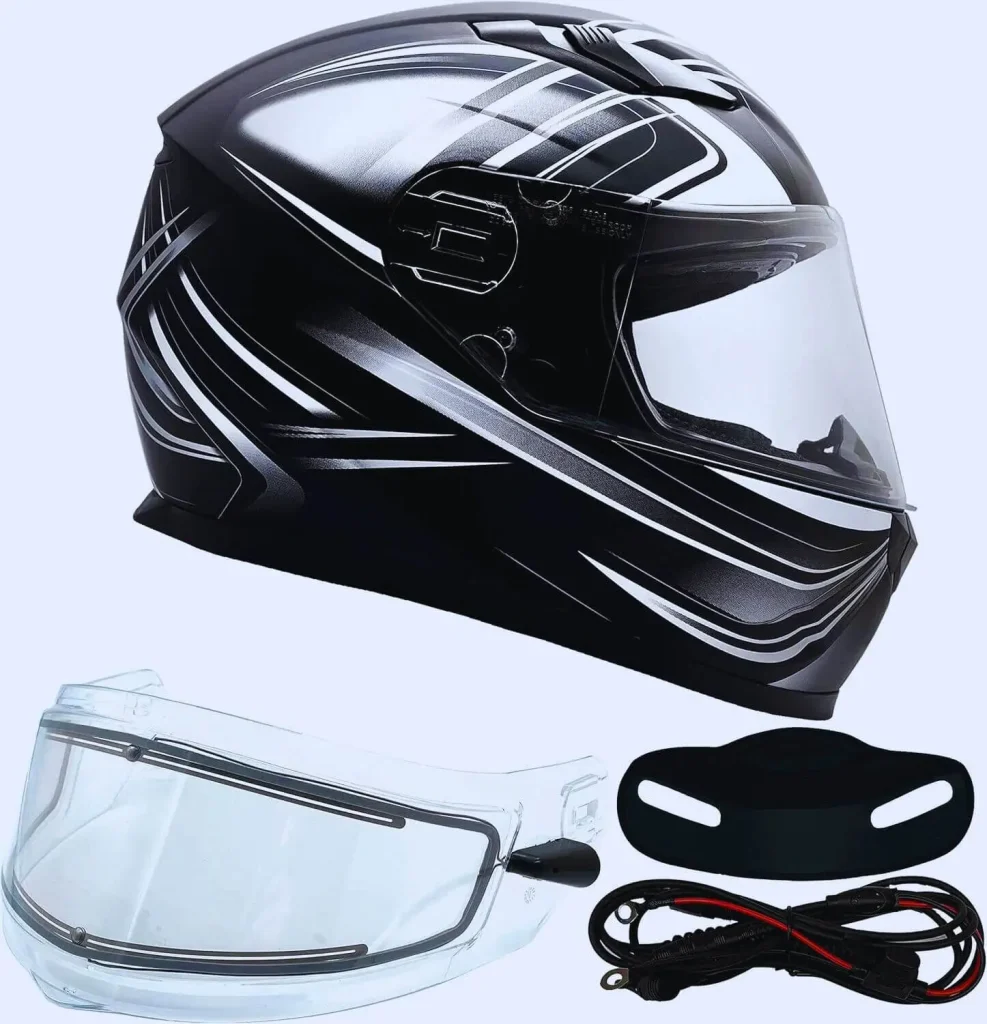
Benefits of Investing in a Heated Snowmobile Helmet
Heated snowmobile helmets change the game for winter sports fans. They bring unmatched benefits, boosting safety and fun on the trails.
One big plus is better visibility. These helmets keep the visor fog-free, thanks to their heat. This clear view helps riders spot dangers and tackle tough terrain with confidence.
Heated helmets also up the comfort level. They keep riders warm, even in freezing weather. This means longer rides without feeling cold, leading to more fun and adventure.
- Enhanced focus and alertness due to reduced cold-related distractions
- Decreased risk of hypothermia during long rides
- Improved blood circulation to the head and face
For those who get cold easily, heated helmets make winter sports more fun. You can adjust the heat to fit your comfort, no matter the weather.
Getting a heated helmet is more than just staying warm. It’s about being safer and performing better on every ride. With clear vision, more comfort, and better focus, snowmobiling becomes safer and more enjoyable.
Is a Heated Snowmobile Helmet Worth it?
Thinking about snowmobile safety gear? A heated helmet is often seen as a good buy. Let’s look at the costs, benefits, and safety to see if it’s worth it.
Cost Analysis and Long-term Value
Heated helmets cost more than regular ones at first. But they offer long-term value. They can last many seasons with the right care.
This makes them a wise choice for those who ride often. The extra comfort and safety they provide often make the extra cost worth it.
Performance Benefits
Heated helmets really stand out in performance. They help you see clearly, which is key for safe riding. They prevent fogging and icing, keeping your vision clear.
This clear vision can make your rides safer and more enjoyable. Plus, they keep you warm, so you can ride longer in cold weather.
Safety Considerations
Safety is top priority in snowmobiling. Heated helmets play a big role in keeping riders safe:
- They lower the risk of cold injuries like frostbite.
- They keep you comfortable, which helps you stay focused and react quickly.
- They improve visibility, which is crucial for avoiding accidents.
As important snowmobile safety gear, heated helmets do more than just keep you warm. They offer a complete solution for safety and comfort in cold weather.
Common Features of High-Quality Heated Helmets
High-quality heated helmets have special features that make them stand out. They are designed for cold weather riding. Let’s look at what makes these helmets great.
Battery Life and Power Options
These helmets have long-lasting batteries. They can keep you warm for 2-8 hours on one charge. Some even connect to your snowmobile for endless power.
Temperature Control Systems
Keeping the right temperature is key. Helmets come with different heat settings. Some even have smart sensors to keep you at the perfect warmth.
Ventilation and Anti-fog Properties
Clear vision is essential for safety. Top helmets have great ventilation and anti-fog visors. They prevent fog and keep your view clear in all conditions.
| Feature | Entry-Level | Mid-Range | Premium |
| Battery Life | 2-3 hours | 4-6 hours | 6-8 hours |
| Heat Settings | 1-2 | 3-4 | 5+ |
| Ventilation Points | 2-3 | 4-5 | 6+ |
| Anti-fog Technology | Basic coating | Double-lens system | Electric anti-fog |
Temperature Management and Comfort Levels
Heated snowmobile helmets change the game for riding in the cold. They offer unmatched comfort. These helmets have different heat levels, so riders can adjust to their liking and the weather.
Even warmth is crucial for comfort. Top-notch heated helmets spread heat evenly. This stops cold spots that can make long rides uncomfortable.
Here’s a breakdown of typical heat settings and their uses:
| Heat Setting | Temperature Range | Ideal Conditions |
| Low | 32°F to 20°F | Mild winter days, light activity |
| Medium | 20°F to 0°F | Average winter conditions |
| High | Below 0°F | Extreme cold, high wind chill |
Being able to adjust the temperature makes a big difference. It helps riders stay comfortable on long rides. They can keep their body temperature just right, without getting too hot or cold.
If you ride in the cold a lot, a heated helmet is a game-changer. It makes the sport more enjoyable and comfortable.
Safety Standards and Certification Requirements
Snowmobile helmet safety is very important for riders. Knowing about helmet certifications helps keep you safe on the trails. I’ll explain the key safety standards and what to look for in a heated helmet.
DOT Compliance
DOT compliance is key for snowmobile helmet safety. It means the helmet meets U.S. Department of Transportation standards. DOT-approved helmets are tested for impact resistance, penetration protection, and how well they stay on.
ECE Ratings
ECE ratings are also crucial. The Economic Commission for Europe standard is known worldwide. ECE-rated helmets pass tough tests for absorbing impacts, visor quality, and chin strap strength.
Additional Safety Features
Look for these extra safety features in heated helmets:
- Automatic shut-off mechanisms
- Impact-resistant heating elements
- Reinforced shell construction
- Enhanced visibility options
| Certification | Key Tests | Recognized In |
| DOT | Impact, penetration, retention | United States |
| ECE | Impact absorption, visor, chin strap | Europe, Australia, New Zealand |
Choosing a helmet with these certifications and features means you’re focusing on safety. A good heated helmet offers warmth and vital protection.
Maintenance and Care Tips
Keeping your snowmobile gear in good shape is crucial. Regular care helps your helmet last longer and work better. It keeps the heating elements in top condition.
Cleaning your heated helmet needs care. Use a soft cloth with mild soap and water on the outside. For the inside, a fabric cleaner made for helmet linings is best. Stay away from harsh chemicals that can harm the heating parts.
Storing your helmet right is important. Place it in a cool, dry spot, away from sunlight. A helmet bag helps protect it from dust and scratches.
| Maintenance Task | Frequency | Importance |
| Exterior cleaning | After each use | High |
| Interior cleaning | Monthly | Medium |
| Battery check | Before each ride | Critical |
| Wire inspection | Seasonally | High |
Regular checks are key. Look for wear or damage on the wiring and connections. If the heating doesn’t work right, get a pro to fix it. Good care means safety and comfort on every ride.
Comparing Top Heated Helmet Brands
I’ve looked into the market to give you a detailed guide on the best heated snowmobile helmets. This guide will help you find the perfect helmet, whether you’re looking for premium, mid-range, or budget-friendly options.
Premium Options
Premium heated helmets offer the best performance. They are made with top materials, have long battery life, and precise temperature control.
Mid-range Choices
Mid-range heated snowmobile helmets are a good middle ground. They have reliable heating and solid build without costing too much.
Budget-friendly Alternatives
Even on a tight budget, you can still enjoy warm rides. Budget-friendly heated helmets offer basic heating and protection at lower prices.
| Brand | Price Range | Battery Life | Temperature Settings | Key Features |
| Arctic Cat | $500-$700 | 8-10 hours | 3 settings | Bluetooth integration, anti-fog visor |
| Ski-Doo | $300-$500 | 6-8 hours | 2 settings | Lightweight design, quick-change lens system |
| FXR | $200-$300 | 4-6 hours | 1 setting | Basic heating element, DOT certified |
This comparison shows the wide range of heated snowmobile helmets available. The right choice depends on your needs, how often you ride, and your budget.
Common Issues and Troubleshooting
I’ve seen many heated helmet problems over the years. Let’s look at some common issues and tips for snowmobile gear. This will help you stay warm on the trails.
Uneven heating is a common problem. If you find cold spots, check for loose connections or damaged heating elements. Sometimes, just adjusting the helmet can fix it.
Battery issues can leave you cold. Short run times mean it’s time for a new battery. Always keep your battery charged and store it right when not using it.
- Control malfunctions: Clean the buttons and check for moisture damage
- Connectivity problems: Ensure all wires are securely connected
- No heat: Verify the power source and check for blown fuses
If these problems don’t go away, it’s time to see a pro. Regular maintenance is crucial. Clean your helmet after each ride and check the wiring often.
For more complex issues, check your helmet’s manual or contact the maker. They usually have specific advice for their products. This can save you time and trouble.
“An ounce of prevention is worth a pound of cure” – This old saying is true for heated helmet care.
By fixing problems early and keeping your gear in good shape, you’ll have many comfortable rides ahead.
When to Replace Your Heated Helmet
Knowing when to replace your heated snowmobile helmet is key for safety on the trails. I’ll show you the signs that mean it’s time for a new helmet. This way, you can keep your gear safe and in top shape.
Signs of Wear and Tear
Look for cracks, dents, or deep scratches on your helmet’s shell. Also, check the padding inside for any wear or compression. If you see these problems, it’s time for a new helmet.
Performance Degradation Indicators
Notice if your helmet’s heating isn’t as good as it used to be. If it takes longer to warm up or doesn’t get hot enough, the heating elements might be failing. Also, watch out for a battery that doesn’t last as long.
Safety Considerations for Replacement
Helmets have a limited life, even if they look fine. Most makers say to replace them every 3-5 years because materials can break down. Keeping up with the latest safety tech is also important for your protection.
| Indicator | Action Required |
| Visible damage to shell | Immediate replacement |
| Compressed interior padding | Replace within 1-2 months |
| Reduced heating efficiency | Evaluate and replace if persistent |
| Age over 5 years | Replace regardless of condition |
Regular checks and timely replacement are crucial for safety on snowmobile rides. Don’t risk your safety – get a new helmet when you see these signs.
Conclusion
I’ve looked into heated snowmobile helmets and their value for winter riding. These helmets bring many benefits, like better comfort and safety in the cold. Whether or not to buy one depends on your riding habits and needs.
For those who ride a lot in cold weather, a heated helmet can be a big plus. It keeps your face clear and your head warm, making rides longer and safer. But, they cost more than regular helmets. You must think about the extra cost versus the comfort and safety they offer.
Ultimately, the heated snowmobile helmet’s worth depends on what you value most. If you prioritize comfort and safety in the cold, it’s a good choice. But if you ride less or in warmer weather, a standard helmet might be enough. Always remember, safety comes first, and proper care of your gear is key.
FAQ
What is a heated snowmobile helmet?
A heated snowmobile helmet keeps your head and face warm in cold weather. It has a battery-powered heating system in the lining.
How do heated snowmobile helmets work?
Heated snowmobile helmets use electrical heating elements in the lining. These are powered by a rechargeable battery or the snowmobile’s system. The heat spreads across the helmet, focusing on the forehead and ears.
Are heated snowmobile helmets safe?
Yes, they are safe. Heated helmets meet the same safety standards as regular helmets. They have impact-resistant heating elements and safety features like automatic shut-off.
How long does the battery last in a heated helmet?
Battery life varies by model and heat setting. Most batteries last 2 to 6 hours on a single charge. Some models offer longer battery life or direct connection to your snowmobile.
Can I adjust the temperature in a heated snowmobile helmet?
Yes, most heated helmets have adjustable temperature settings. You can choose from low to high heat, depending on the weather and your preference.
How do I maintain my heated snowmobile helmet?
To keep your helmet in good shape, clean it with mild soap and avoid water on electrical parts. Store it dry and check the wiring and heating elements often. Always follow the manufacturer’s care instructions.
Are heated snowmobile helmets worth the investment?
Whether a heated helmet is worth it depends on your needs and where you ride. For those who ride often in cold weather, the comfort and safety are worth it. But for occasional riders or those in milder climates, a regular helmet might be enough.
Do heated helmets help with visor fogging?
Yes, many heated helmets have features to prevent fogging. The warmth helps reduce condensation on the visor. Some also have special ventilation to fight fogging.
How much do heated snowmobile helmets cost?
Prices vary from around $200 for basic models to over $1000 for premium ones. Mid-range helmets with good features cost between $300 and $600.
When should I replace my heated snowmobile helmet?
Replace your helmet if you see significant wear, it’s been in an impact, or the heating isn’t as good. It’s a good idea to replace it every 3-5 years, even if it looks fine.