
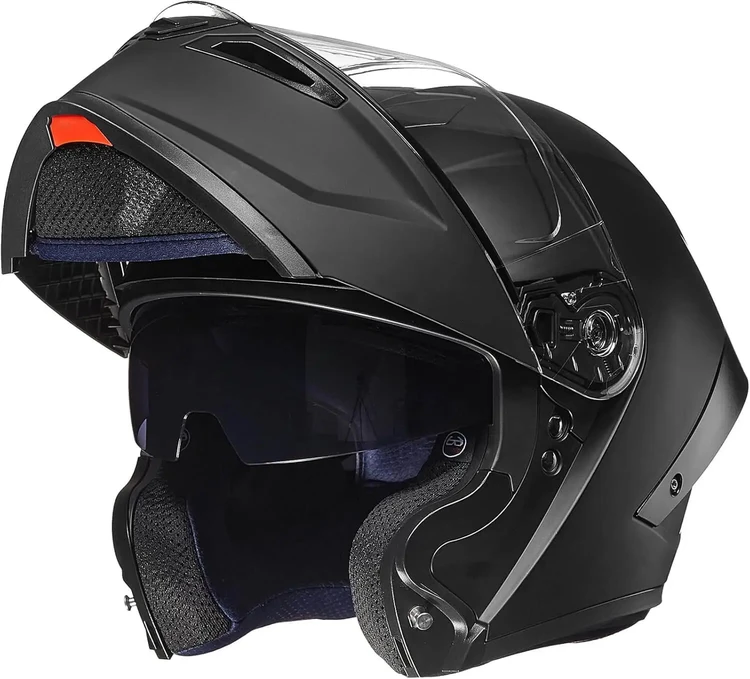
What is a Modular Helmet
When it comes to motorcycle safety, your choice of helmet could mean the difference between life and death. Among the most debated options are modular helmet vs full face designs, each claiming to offer superior protection.
Modular helmets provide the versatility of both open and full-face configurations, while full-face helmets offer a single, unified protective shell. This fundamental difference raises important questions about safety, protection levels, and real-world performance.
This comprehensive guide examines scientific testing data, crash statistics, and safety certifications to help you understand which helmet type truly offers better protection. We’ll analyze everything from impact absorption technologies to emergency release systems, giving you the facts needed to make an informed decision about your safety.
Understanding Helmet Safety Standards
Safety standards serve as the backbone of helmet protection, with three major certifications dominating the motorcycle helmet industry: DOT, ECE, and SNELL. Each certification represents different levels of testing rigor and safety requirements.
Impact Testing Requirements
Each standard employs unique testing methodologies to ensure helmet safety:
- ECE 22.06 testing includes impacts at various speeds (6.0 m/s, 7.5 m/s, and 8.2 m/s) to simulate different accident scenarios.
- SNELL certification demands a maximum energy transfer of 275g after two consecutive blows.
- DOT testing allows up to 400g of peak acceleration during impact tests.
Chin Bar Safety Standards
The chin bar safety requirements have evolved significantly, particularly for modular helmets. Under ECE 22.06, modular helmets must undergo stringent testing in both open and closed positions. For full-face configurations, the chin bar must withstand a specific impact test where a mass of 5 ± 0.2 kg is dropped with an impact velocity of 3.5 ± 0.2 m/s.
The latest ECE standard has expanded testing points from 6 to 18 locations, requiring more advanced helmet shells for comprehensive protection. This development particularly affects the comparison between modular and full-face helmets, as both must now meet these enhanced safety requirements to achieve certification.
Anatomy of Protection Systems
The protective capability of a motorcycle helmet lies in its sophisticated multi-layer construction and advanced materials working in harmony. Understanding these systems is crucial for evaluating the safety differences between modular and full-face helmets.
Shell Construction and Materials
Modern helmet shells employ a range of materials, from basic thermoplastics to advanced composites. The outer shell’s primary function is to distribute impact forces across a wider area while maintaining structural integrity. Carbon fiber helmets demonstrate superior strength-to-weight ratios and can absorb up to 27% more energy than traditional expanded polystyrene materials.
Recent innovations include architected vertically aligned carbon nanotube foam, featuring specialized cylinder structures that maximize shock absorption. Testing has shown that cylinders with thickness of 10 micrometers or less, arranged in close proximity, deliver optimal protection.
Impact Absorption Technologies
The impact absorption system consists of multiple specialized layers:
- Primary Impact Layer: Made of expanded polystyrene foam (EPS), designed to compress and absorb shock during impacts.
- Advanced Cushioning: Air-bubble cushioning technology increases shock absorption performance by 145% compared to traditional materials.
- Ventilation Integration: Modern systems like KOROYD technology maintain 95% air composition while enhancing impact absorption through 80% of material thickness.
Retention System Comparison
The retention system’s design significantly affects helmet security during impacts. Full-face helmets typically employ the Double-D ring system, positioned under the chin for maximum stability. This configuration maximizes friction between the retention strap and D-rings, optimizing retention strength.
In contrast, modular helmets often utilize quick-release or micrometric fasteners. While these systems offer greater convenience, mechanical failure rates tend to be higher, particularly in products with non-metal components.
A key distinction lies in the fastening position: full-face helmets secure under the chin, while some modular designs fasten on the side. This positioning difference can affect retention effectiveness, as side-mounted systems may experience reduced friction during impact.
The latest retention innovations include magnetic buckles for one-handed operation and advanced adjustment systems like the CAM FIT™, which provides micro-adjustments while maintaining compliance with ACH and ECH Static Pull Strength requirements.
Crash Impact Analysis
Real-world crash data reveals compelling insights into motorcycle helmet effectiveness and protection levels. According to comprehensive studies, motorcycle helmets have saved an estimated 25,000 lives between 2002 and 2017, demonstrating their crucial role in rider safety.
Statistical Data from Real Accidents
The evidence supporting helmet protection is substantial. Unhelmeted motorcyclists are more than four times likely to sustain head injuries 14 and ten times more likely to experience brain injuries compared to their helmeted counterparts. In a extensive study of 315,258 motorcycle accidents, helmeted riders showed significantly lower rates of severe head trauma (13.3%) compared to non-helmeted riders (28.5%).
Common Impact Zones
Analysis of motorcycle accidents reveals distinct patterns in injury locations:
- Head and neck injuries: 40-60.6% of cases
- Lower extremities: 39.9-48.5% of incidents
- Upper trunk and thorax: Third most affected region
Safety Features Deep Dive
Modern motorcycle helmets incorporate sophisticated safety features that go far beyond basic impact protection. Let’s examine the advanced systems that differentiate today’s protective gear.
Visor Protection Systems
Motorcycle visors serve as critical safety components, blocking 99% of harmful UV rays while providing clear visibility. High-quality visors utilize advanced polycarbonate materials, with some manufacturers producing visors up to four times thicker than standard specifications.
Modern visor protection includes:
- Anti-fog and anti-scratch treatments for optimal visibility
- UV protection treatments for eye safety
- Tear-off film systems for racing applications
- High-strength polycarbonate construction
Emergency Release Systems
The Emergency Quick Release System (EQRS) represents a significant advancement in helmet safety technology. This system enables first responders to safely remove helmets from injured riders while minimizing potential neck and spine trauma. The EQRS functionality allows for:
- Quick removal of cheek pads through red emergency tabs
- Minimal head movement during helmet removal
- Easier access for emergency medical treatment
This feature is particularly crucial as it helps emergency personnel remove the helmet with 10-15mm of controlled movement, significantly reducing the risk of secondary injuries during accident response.
Scientific Testing Results
Scientific research and rigorous testing protocols provide concrete evidence for evaluating the protective capabilities of motorcycle helmets. Recent laboratory studies have revolutionized our understanding of helmet safety performance.
Laboratory Test Comparisons
Comprehensive testing of thirty-two contemporary full-facial coverage motorcycle helmets has revealed significant insights into safety performance. When comparing impact absorption capabilities, helmets qualified to different standards showed varying results. The flat surface impact test rankings demonstrated that DOT-qualified helmets performed best, followed by ECE, BSI, and Snell certifications.
For metal edge impact testing, which simulates collision with roadside barriers, the performance ranking shifted:
- BSI-certified helmets showed superior protection
- DOT certification ranked second
- ECE certification placed third
- Snell certification ranked fourth
Modern energy-absorbing liners demonstrate marked improvement compared to those manufactured 15 years ago. Notably, the best-performing model in comprehensive testing was qualified only to the DOT standard, challenging common assumptions about certification hierarchies.
Wind Tunnel Testing Data
Advanced aerodynamic testing conducted in specialized wind tunnels has provided crucial insights into helmet performance. Tests performed in a 5′ x 7′ wind tunnel facility revealed significant differences in aerodynamic forces between helmet designs. The research measured three critical factors:
- Lifting forces
- Drag resistance
- Side-to-side buffeting forces
Through sophisticated wind tunnel analysis, researchers achieved remarkable improvements in helmet design:
- 72% reduction in lifting forces.
- 58% decrease in side-to-side buffeting forces.
- These improvements directly translate to reduced neck fatigue and improved visibility for riders, particularly during high-speed operation.
Conclusion
Scientific evidence and crash data clearly show that both modular and full-face helmets offer significant protection when properly certified. Full-face helmets demonstrate superior protection through their unified construction and consistent performance across impact scenarios, making them the preferred choice for maximum safety.
Modular helmets have made remarkable strides with advanced locking mechanisms and improved materials, now offering protection levels close to their full-face counterparts. Their versatility comes with minor compromises at mechanical connection points, though modern designs have largely minimized these concerns.
Safety certifications play a crucial role in helmet effectiveness. Riders should prioritize helmets meeting ECE or SNELL standards for optimal protection, as these certifications demand rigorous testing beyond basic requirements. The latest technologies like MIPS and emergency release systems further enhance protection, regardless of helmet type.
Your choice between modular and full-face ultimately depends on riding style and personal preferences. Full-face helmets remain the gold standard for maximum protection, especially during high-speed riding or track use. Modular designs offer practical advantages for urban riders while maintaining high safety standards through advanced engineering and materials.